Building a Digit Detection System Using the Supervised Machine Learning Algorithm - KNN
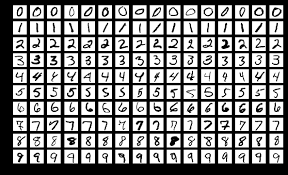
Machine learning becomes truly valuable when theoretical concepts are applied to real-world problems. A handwritten digit detection system using the K-Nearest Neighbors (KNN) algorithm is a practical example that demonstrates how a simple algorithm can be extended into a complete application. This type of project helps in understanding the full lifecycle of a machine learning system, including training, prediction, application development, and deployment, using tools such as VS Code and GitHub.KNN is a supervised machine learning algorithm used primarily for classification tasks. It operates by identifying the K closest data points to a new input and assigning the class based on majority voting. The algorithm does not explicitly learn a model during training but instead stores the dataset and performs computations at the time of prediction. This makes it particularly effective for pattern recognition problems such as handwritten digit classification.
The training phase involves initializing the KNN classifier with a selected value of K and fitting it on the training data. Once trained, the model is saved using serialization so that it can be reused without retraining. Separating the training logic into a dedicated module improves code organization and aligns with industry practices.The prediction functionality is handled in a separate module that loads the saved model and processes new input data to generate predictions. This modular design ensures that the same prediction logic can be reused across different interfaces, such as a local application or an API.
Streamlit is used to create a simple and interactive user interface. It allows users to input data and obtain predictions in real time, making it suitable for local execution and demonstration purposes. The interface simplifies interaction with the model without requiring knowledge of the underlying code.
FastAPI is used to build an API layer that exposes the model for external access. This enables integration with other systems and supports scalable deployment. FastAPI provides a fast and efficient way to create web services for machine learning models.The overall system is structured into multiple components, including training, prediction, user interface, and API. This modular architecture reflects real-world development practices where each component is designed to function independently while contributing to the complete system.
Development is typically carried out using VS Code, which supports efficient coding, debugging, and project management. Version control is managed using Git, and the project is hosted on GitHub to maintain a structured repository. This includes organizing files, tracking changes, and ensuring reproducibility.Such a project provides a comprehensive understanding of building and deploying machine learning applications. It demonstrates how algorithms, tools, and frameworks can be integrated to create a functional system suitable for real-world use.
This entire work, including design, implementation, and deployment, was independently performed by Ritika Deshmukh, Data Analyst at MacroEdtech.
Link : https://github.com/rdeshmukh92/DataAnalystIntern/tree/main/Task%2008
Feel free to contact us at info@macroedtech.com for any clarification .