Heat Wave Prediction In India Using Random Forest Machine Learning Algorithm
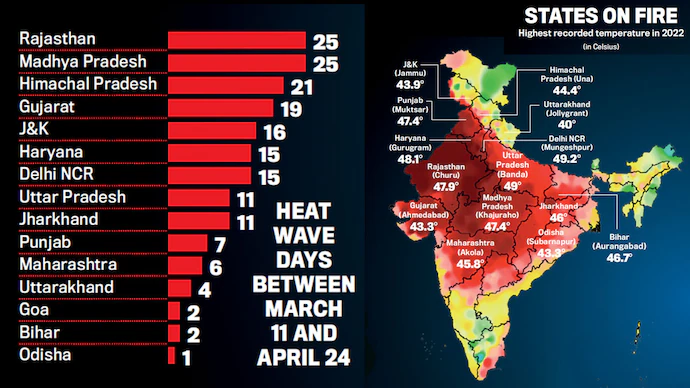
The primary objective of using the Random Forest machine learning method in this study is to accurately predict the occurrence of heatwaves in India based on multiple climatic and environmental factors. Heatwaves are becoming increasingly frequent and severe due to climate change, posing significant risks to public health, agriculture, and infrastructure. By applying the Random Forest algorithm, which is an ensemble learning technique that combines multiple decision trees, the model can analyze complex relationships between variables such as maximum temperature, average temperature, humidity, rainfall, wind speed, and urbanization index. This approach helps in identifying patterns within historical weather data and enables reliable prediction of potential heatwave events.Another objective of this research is to support data-driven climate risk assessment and early warning systems for extreme heat conditions. The Random Forest model helps improve prediction accuracy by reducing overfitting and handling large datasets effectively, making it suitable for climate analysis. Through this model, policymakers, researchers, and disaster management authorities can better understand the factors influencing heatwaves and take proactive measures to mitigate their impact.
This complete analysis has been conducted using the Random Forest Machine Learning model by Ritika Deshmukh, Data Analyst, MacroEdtech.
The Google Colab notebook for this analysis is available below, and for access to the dataset, please contact info@macroedtech.com.
Google Colab Notebook : https://colab.research.google.com/drive/1w28MaGUfJAGSXDoHo8FMynFvOX0OtLyJ?usp=sharing