Importance of Preparing Plant Species Documentation Before Ground Surveys
Ground surveys are one of the most important parts of environmental and biodiversity studies. Before visiting forests, grasslands, or ecological regions, proper planning and documentation of plant species play a major role in making the survey accurate, organized, and efficient.Preparing a document with plant names, species information, and reference details before fieldwork helps researchers and survey teams identify plants more quickly during the survey. It reduces confusion, saves time in the field, and improves the overall quality of data collection.In regions like the Western Ghats of Maharashtra, biodiversity is extremely rich and complex. Many plant species may look similar, and without prior documentation, it becomes difficult to identify and record them correctly. A well-prepared species document acts as a ready reference guide for the survey team.Such documentation also helps in:
- Understanding regional biodiversity before field visits
- Improving species identification accuracy
- Reducing errors during data collection
- Supporting ecological and conservation research
- Making teamwork and field coordination easier
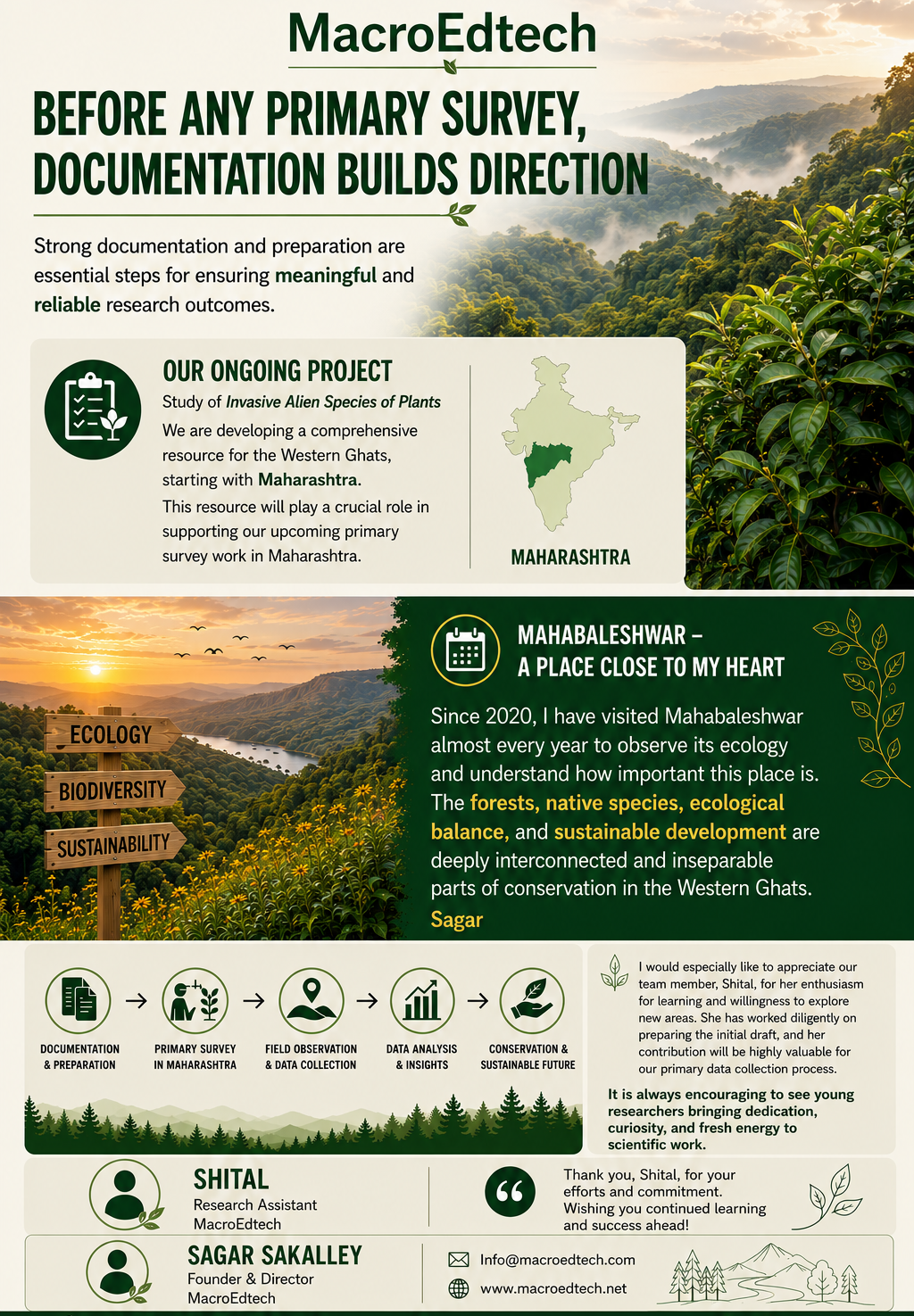
Another important benefit is that researchers can prepare observation methods and survey strategies in advance based on the listed species. This increases productivity during ground surveys and helps teams focus more on analysis and conservation work.Our team member, Shital, prepared an important reference document containing more than 140 plant species from the Western Ghats region in Maharashtra. This documentation will be highly useful for future ground surveys, biodiversity studies, and environmental research activities.
This document was prepared by our team member, Shital.