Understanding Naive Bayes: A Simple Yet Powerful Machine Learning Algorithm for Spam Email Detection
In the rapidly evolving field of machine learning, classification algorithms play a crucial role in solving real-world problems. One such elegant and efficient algorithm is the Naive Bayes classifier. Despite its simplicity, it is widely used in applications like spam email detection, sentiment analysis, and document classification. We’ll explore how Naive Bayes works and how it can be applied to detect spam emails effectively. Naive Bayes is based on Bayes’ Theorem, a fundamental concept in probability theory.
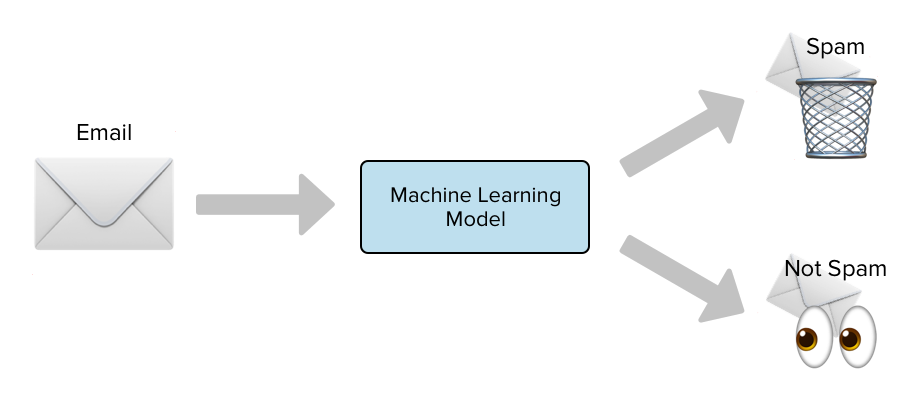
The algorithm assumes that the features used for classification are independent of each other, hence the term “naive.” While this assumption may not always hold true in real-world scenarios, the algorithm still performs remarkably well in many practical applications. It calculates the probability of a data point belonging to a particular class and assigns it to the class with the highest probability.When it comes to spam email detection, Naive Bayes shines due to its efficiency and accuracy. The model is trained on a dataset of emails labeled as “spam” or “not spam.” It learns the probability of certain words or phrases appearing in spam emails versus legitimate ones. For example, words like “free,” “win,” or “offer” might have a higher probability of appearing in spam emails. When a new email arrives, the model analyzes its content and calculates the likelihood of it being spam based on these learned probabilities.One of the biggest advantages of Naive Bayes is its speed and low computational cost. It works well even with relatively small datasets and can handle large volumes of data efficiently. Additionally, it is easy to implement, making it a popular choice for beginners in machine learning.
Our team recently worked on a project involving spam email detection using the Naive Bayes algorithm. The model was trained and tested on a dataset of emails, and it demonstrated strong performance in accurately classifying spam messages. This project highlights how even simple algorithms can deliver impactful solutions when applied correctly.
If you're interested in exploring the implementation and learning more about this project, you can check out the detailed work on GitHub repository prepared by Ritika Deshmukh, Data Analyst, MacroEdtech.
https://github.com/rdeshmukh92/DataAnalystIntern/tree/main/Task%2009
For any learning support or assistance, please feel free to contact us at info@macroedtech.com