Unveiling Particle Secrets: A Study of Dimuon Events from CERN
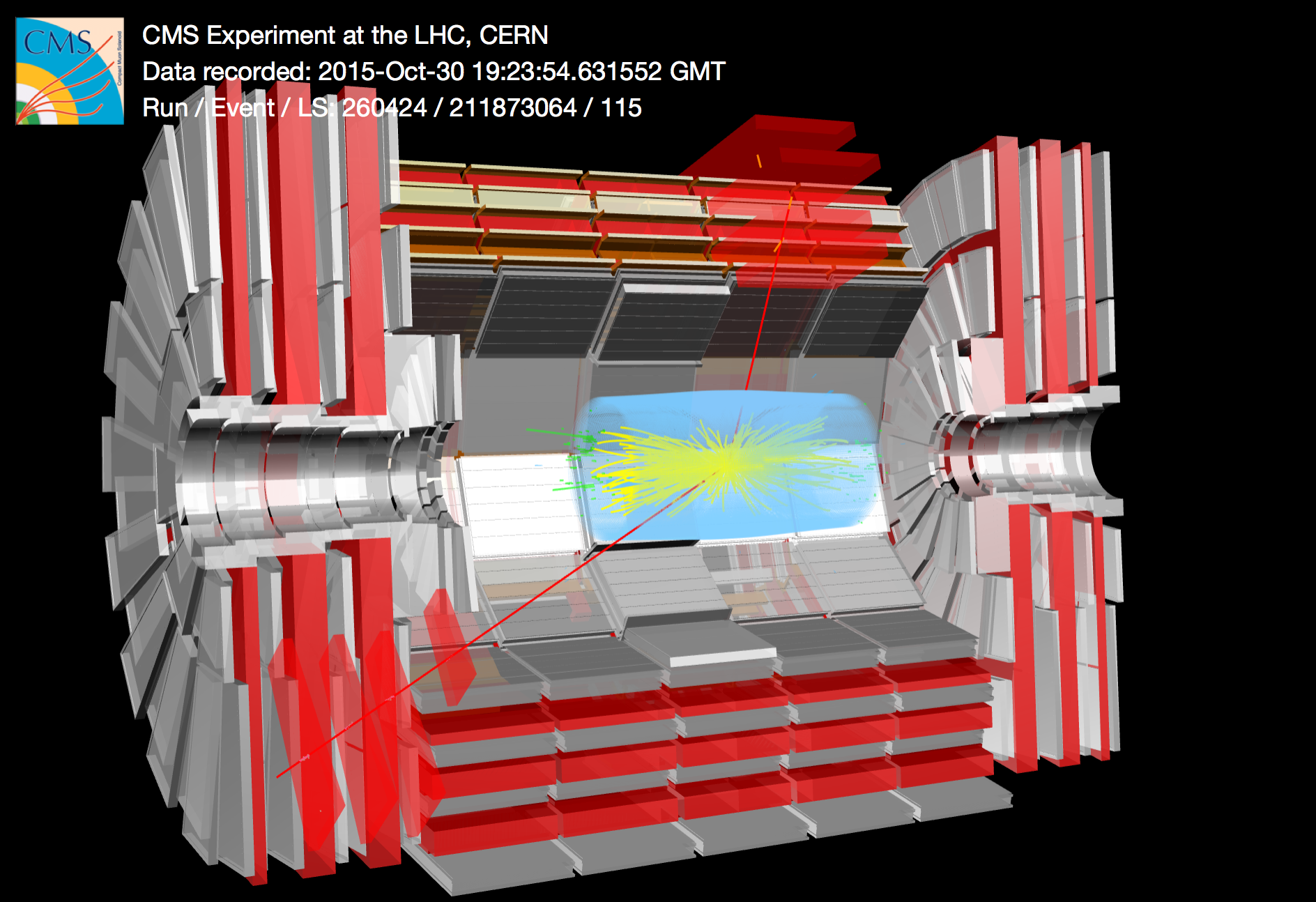
The analysis of dimuon data from CERN offers a fascinating glimpse into the world of particle physics and the fundamental forces that govern our universe. This project focuses on events recorded at the Large Hadron Collider, where high-energy particle collisions produce various subatomic particles, including muons. A dimuon event occurs when two muons, particles similar to electrons but significantly heavier, are detected from a single collision. By studying these events, scientists can uncover important physical phenomena. One of the key analyses performed is the invariant mass distribution of muon pairs, which reveals a strong peak around 90 GeV. This observation closely aligns with the known mass of the Z boson, indicating that many of these dimuon events result from the decay of Z bosons. Further analysis comparing the energies of the two muons shows a scattered distribution with no strong correlation, suggesting that each muon’s energy is largely independent. Additionally, the study of transverse momentum highlights that most muons are produced with moderate momentum, while high-momentum events are relatively rare. Altogether, this project demonstrates how data visualisation and analysis can reveal meaningful patterns in complex scientific datasets, ultimately helping us better understand the fundamental building blocks of matter and their interactions.
This work prepared by Kriti Mourya.
https://github.com/kritimauryavns20-collab/cern-dimuon-analysis/blob/main/README.md